
Systems For Living With
Reflections after Axpona on hi-fi systems, materials, manufacturing and long-term listening

Made to last: Me wearing a sweater of my dad’s from his college days.
Coming back from Axpona this year, I found myself thinking less about individual products and more about some of the conversations that kept happening around and alongside them.
Again and again, common threads kept resurfacing: how hi-fi systems fit into daily life, how rooms shape listening, how materials behave over time, and what actually makes a system satisfying to live with long-term.
I had the opportunity during some rare quiet moments at Axpona to sit down separately with Ryan “Sully” Sullivan from The Sound Designer’s Guide to Hi-Fi and Ken Micallef from Stereophile for two interviews that came at a lot of those ideas, but from slightly different directions.
Although they were different conversations, I’ve realized after thinking about them for the past month they were really circling around the same underlying ideas.
Systems and daily life
One of the things I’ve become increasingly aware of over the years is that most people don’t experience music in controlled listening environments. They’re doing nearly all of their listening in homes, apartments, living rooms, shared spaces, and just as part of everyday life.
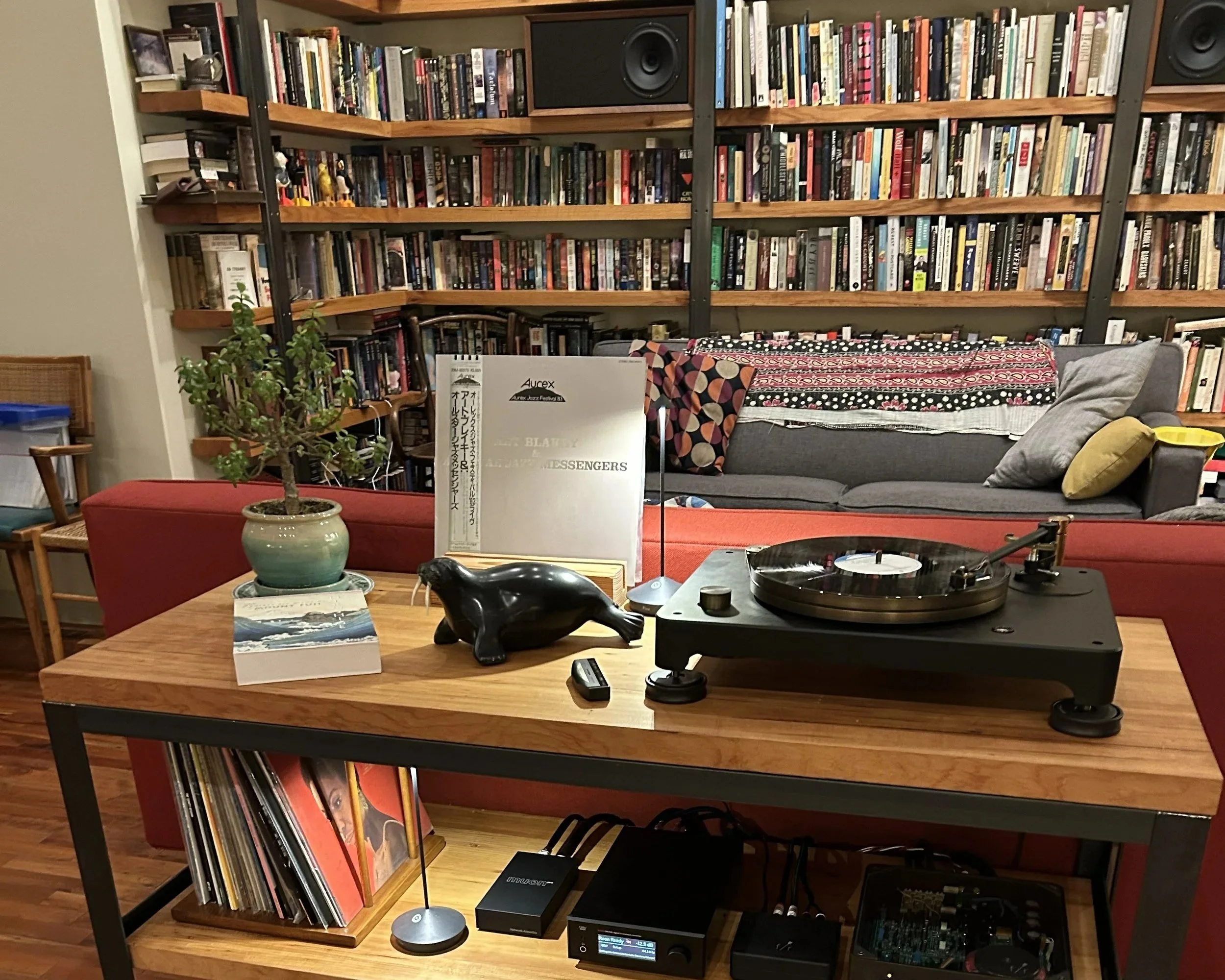
Pictured: My living room setup at home
This reality has shaped the way I approach systems. I’ve never been particularly interested in building products that dominate a room or constantly ask call for attention.
I’ve said in other interviews that I tend to think of hi-fi systems more as tools for living with music over long periods of time.
I like designing and making things that integrate naturally into a space and continue to reveal themselves over time.
That applies sonically, but also visually and physically. If a hi-fi system initially dazzles and impresses only to become fatiguing after a few months, it isn’t really accomplishing what I want out of listening to music. For me, the same is also true for objects/furniture/pieces of art that don’t age well in a home, or that constantly pull your attention toward themselves.
Over time, I’ve found myself more interested in audio systems that feel balanced, flexible, and durable. I want to build systems that remain satisfying, instead of constantly pushing the listener toward the next upgrade because the shiny new sonic or visual feature has become tiresome.
Materials and process
One of the things that connected both of my Axpona interviews was the relationship between materials and meaning.
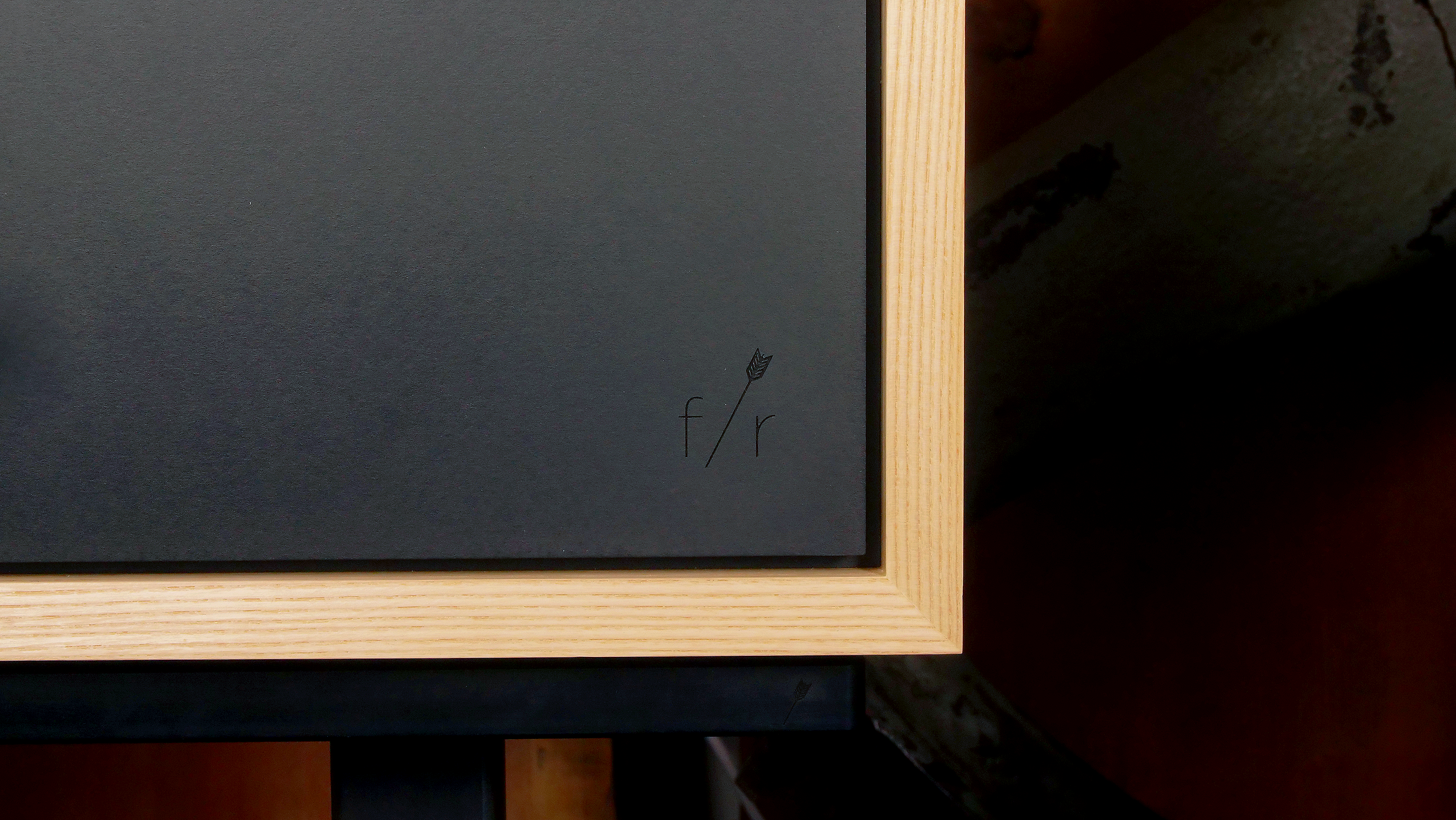
Pictured: Detail of a Raven II bookshelf speaker in ash, sitting on one of our steel & Richlite isolation stands.
Sully and I talked a lot about the visible and tactile qualities of materials: wood grain, patina, texture, and the idea that objects should retain some sense of how they were made rather than hiding it completely.
My conversation with Ken moved further into the manufacturing and engineering details, which makes sense because Fern & Roby really grew out of the work we do through Tektonics Design Group.
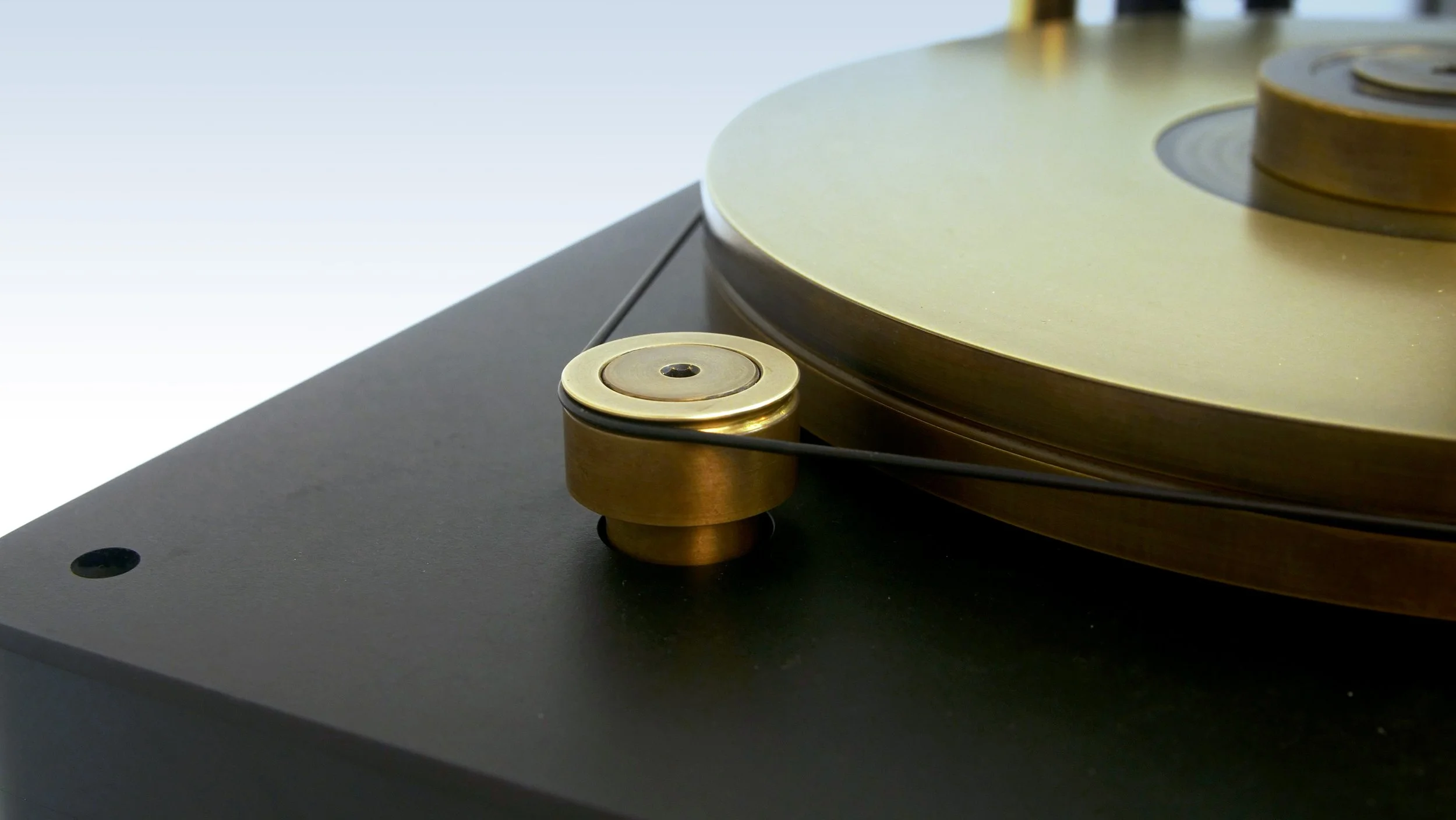
Pictured: Fern & Roby Montrose Heirloom Turntable
Long before we were designing and building turntables and speakers, I spent years working in blacksmithing, metal fabrication, millwork, furniture, and architectural manufacturing. A lot of the way I think about audio products still comes directly from that background.
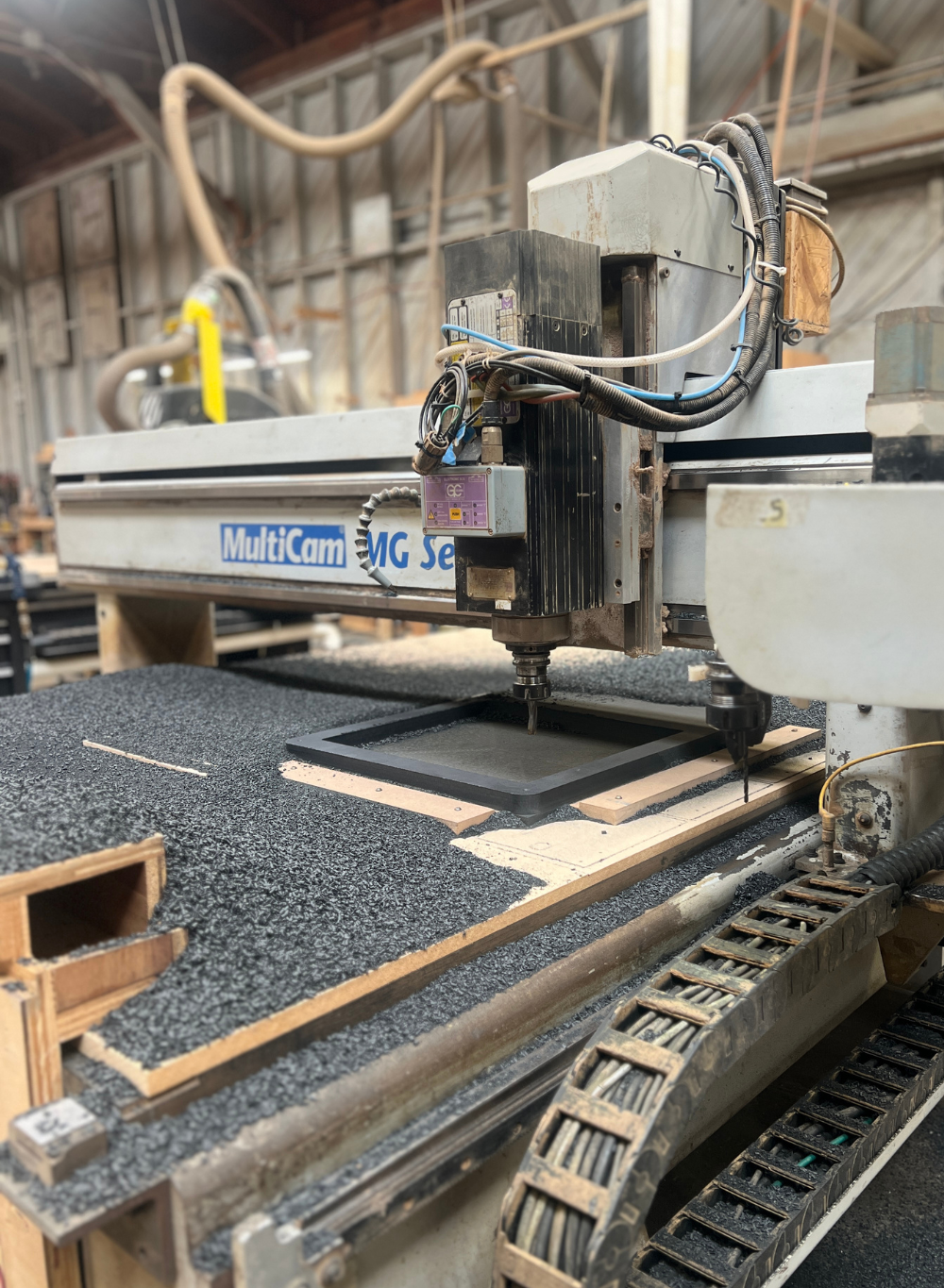
Pictured: CNC machining the Richlite plinth of an Archival Turntable at our shop in Richmond.
I like materials that reveal something about how they were manufactured. I like visible grain in wood. I like the mill scale and patina in steel. I like surfaces that retain some sense of process and texture instead of trying to erase it completely. I like things that have a story.
That interest in material honesty also informs how we think about acoustics and engineering.
In the Archival Turntable, for example, materials like Richlite weren’t chosen simply because they look interesting.
They were chosen because they behave in useful ways structurally and acoustically. The same is true of the damping strategies, suspension systems, and isolation approaches that we continue refining across different products and systems.
It’s not atypical for high-end audio products to be presented as isolated hero objects, but in reality, they are always interacting with rooms, furniture, surfaces, and the rest of the hi-fi system next to and around them. I think that relationship matters.
Living beyond the upgrade cycle
Another thing that came up repeatedly during the interviews was longevity.
Hi-fi has a tendency to sometimes drift toward a path of constant replacement and novelty. There’s always a new product, a new revision, a new upgrade. I understand how that can be exciting, but I’ve never really wanted to build products around disposability or short-term fascination. I would much rather make something that someone lives with for twenty years or more, and that hopefully gets handed down to the next generation.
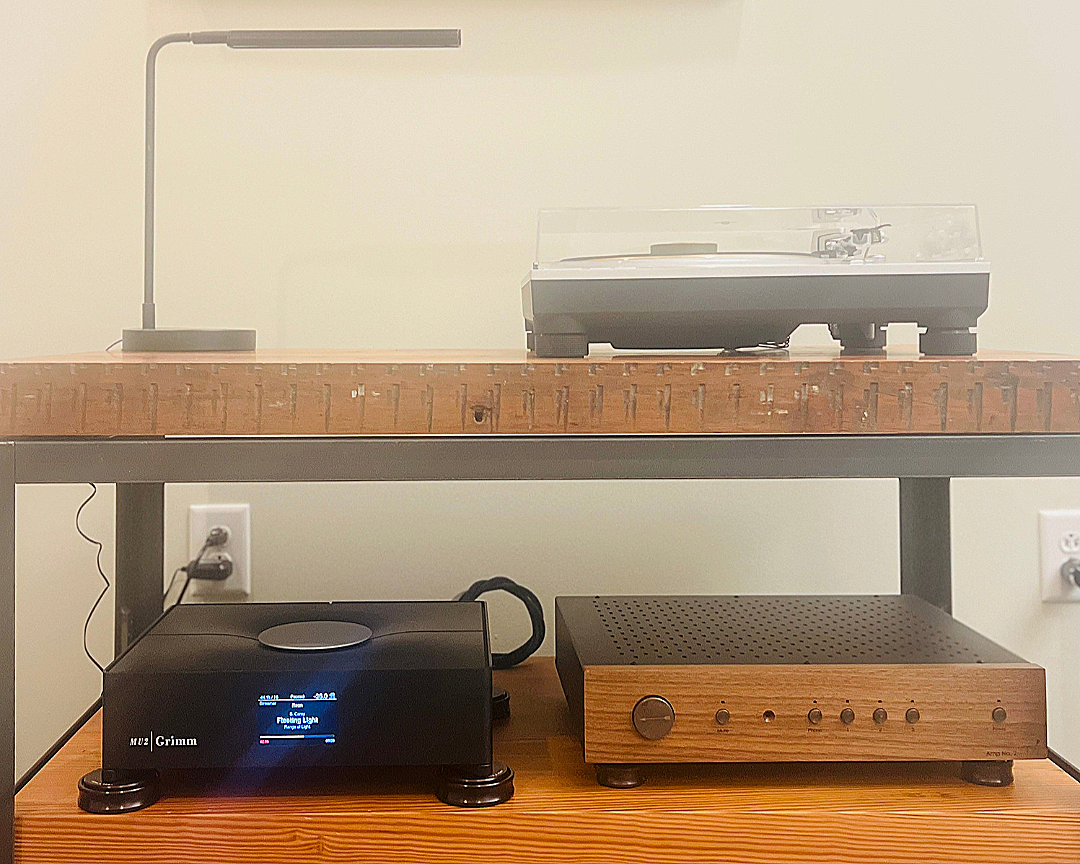
Pictured: Fern & Roby equipment rack, Technics SL-1500C, Grimm Audio MU2, and F&R Amp No. 2
That doesn’t mean resisting all change or pretending technology stands still. I’m no Luddite. Some of the digital products we are authorized dealers for, particularly those from Grimm Audio, are compelling precisely because they’ve been designed to evolve thoughtfully over time through software and ongoing refinement.
But even there, I think the larger goal is stability and long-term satisfaction rather than constant disruption.
The systems that stay with people tend to be the ones that become part of their routines and environments.
They stop feeling like isolated pieces of equipment and start feeling more like instruments for listening.
Forgetting the machine
One of the questions Sully asked during the interview was how I know when a system is really working. The simplest answer I could give was that you begin forgetting you’re listening to a machine.
At a certain point, the system itself becomes less noticeable and your attention shifts fully toward timing, texture, space, dynamics, and the emotional shape of the music itself. You stop evaluating and start listening.
That doesn’t happen because a system exaggerates one particular characteristic.
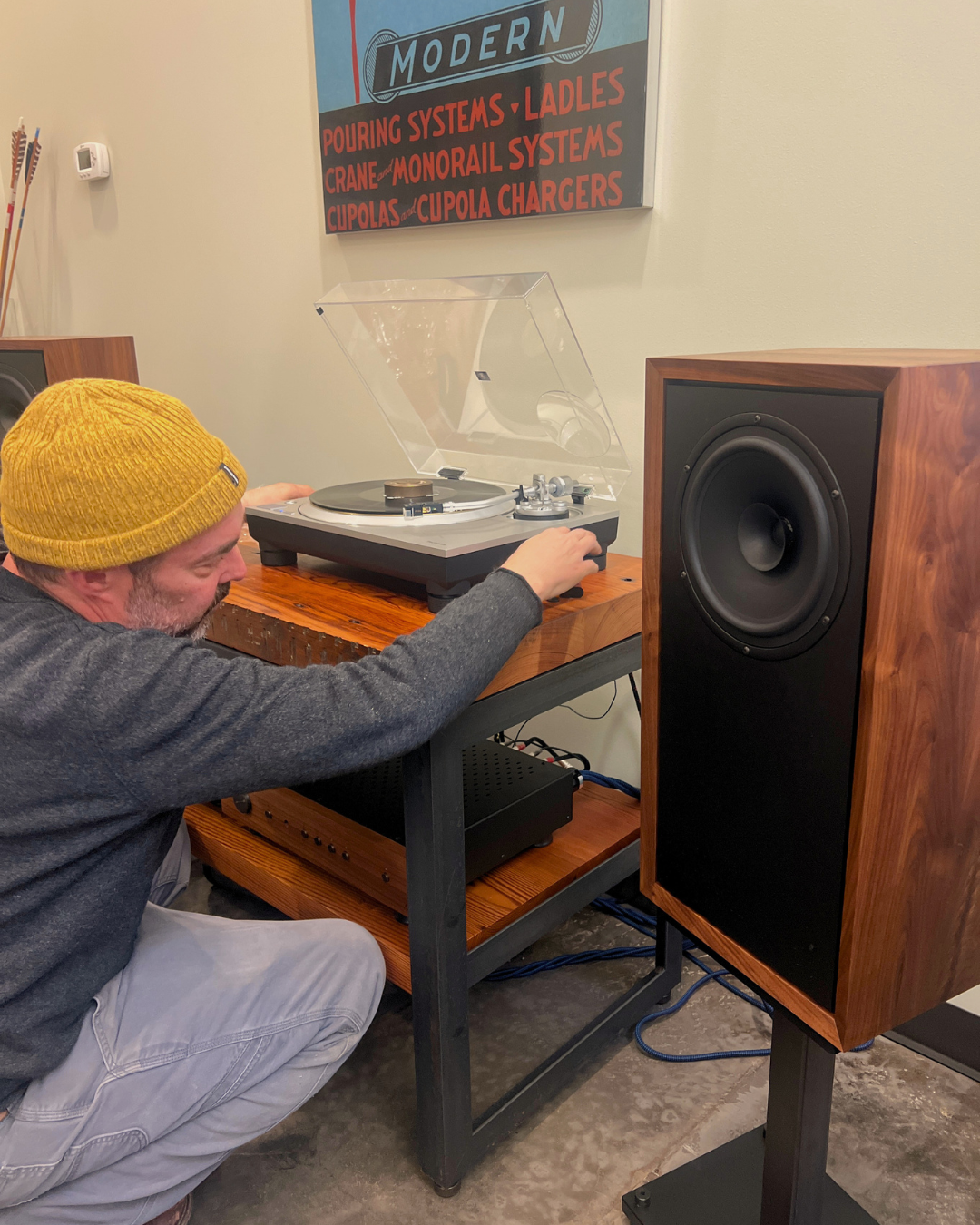
Pictured: Me adjusting our office system at Tektonics.
In my experience, systems become more convincing when the relationships between things feel resolved — when the room, the speakers, the source components, the materials, and the listener all feel connected rather than competitive.
That’s still the part of hi-fi I find most interesting. And honestly, I suspect that’s the conversation we were really having all weekend at Axpona, even when we were ostensibly talking about turntables, speakers, DACs, or racks.
The longer I do this work, the more I find myself paying attention to how systems behave over time as part of someone’s actual listening life, rather than during a quick demo in a perfectly controlled environment or in a temporary hotel room at an audio show.
In many ways, that has become the foundation of how we approach building systems at Fern & Roby: paying attention to relationships, long-term satisfaction, and helping people put together systems that continue to feel rewarding long after the novelty wears off.