
What a Conference Hotel Room Can Teach You About Building a Hi-Fi System
Our approach to system building, from living rooms to AXPONA
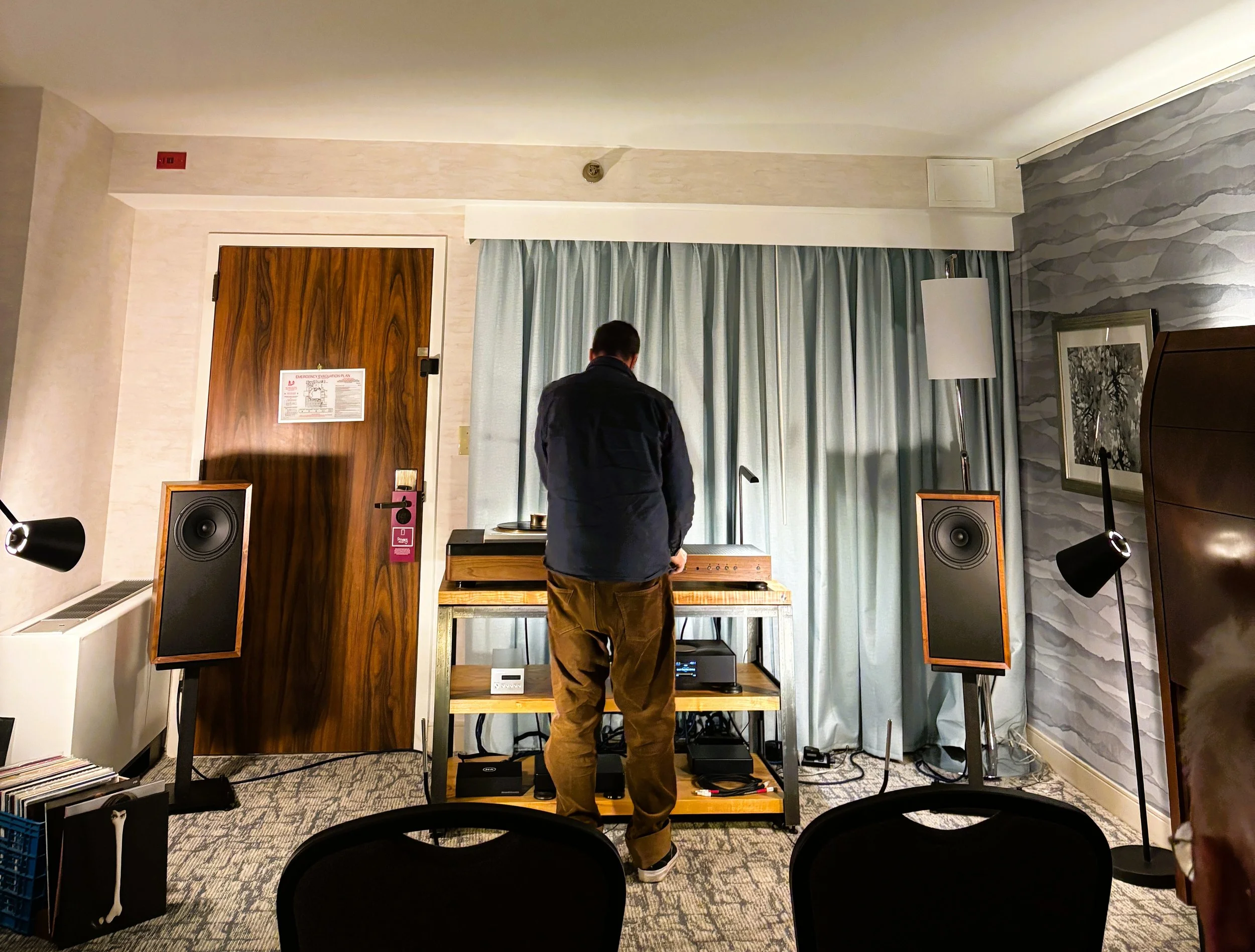
In about a month we’ll walk into an empty hotel room in Chicago to set up for the upcoming audio expo known as AXPONA.
If you’ve never seen one of these show rooms before setup, it’s kind of a weird place to begin building a hi-fi system. Hotel rooms were designed for sleeping, not listening to music.
They almost always have plenum ceilings that hide huge ductwork systems above your space. When the rooms are prepped for audio shows, the hotel staff removes all the nightstands and beds (typically leaving behind a giant wooden headboard that’s permanently attached to one of the walls). Then there’s the intermittent noise from the packaged air conditioner over in the corner, and the asymmetrical floor plans. All of these things can create strange bass resonances, uneven tonal balance, and other acoustic problems.
And yet every year, thousands of high-end audio systems are assembled in rooms like these for audio shows.
Why the room matters more than we think
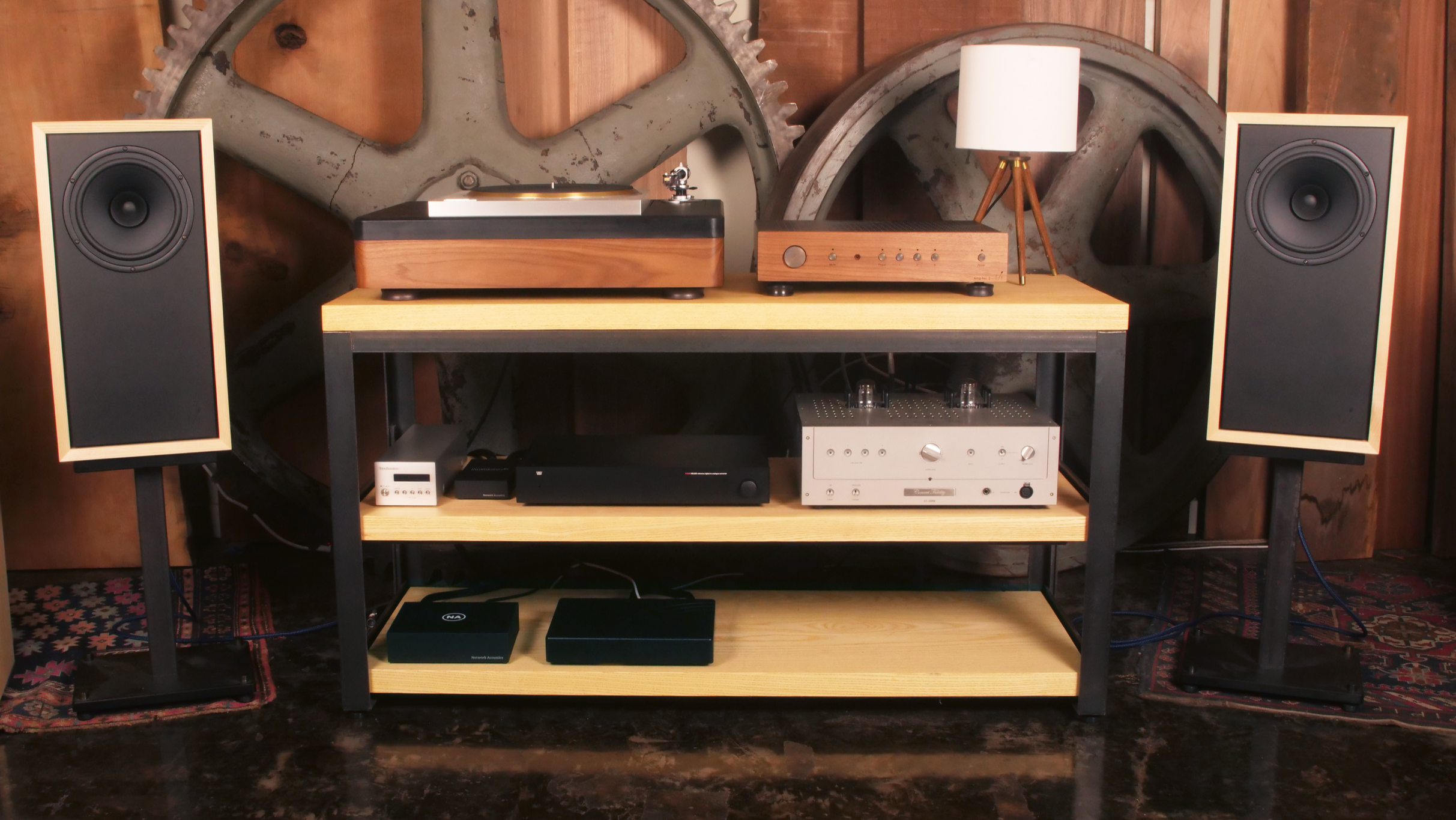
When I first started Fern & Roby, this wasn’t something I thought about very much.
My assumption was fairly straightforward: the goal was to design + build (and also represent) the best sounding components we could: turntables, amplifiers, speakers, and audio furniture and accessories.
If the equipment was excellent, the system would sound excellent, right?
It didn’t take long to realize that this way of thinking was incomplete. Without considering the room, you can’t really achieve anything approaching ideal sound, even if you have the best components in the world.
I know that take might sound obvious, but in my experience, some audiophiles can spend more time thinking about the components they have (or the components they want to have) than they do about the spaces those components will actually live in and be expected to perform in. There can be endless discussion about turntables, tonearms, cartridges, speakers, amplifiers, cables and DACs, but far less conversation about the room itself.
Most systems live in real rooms

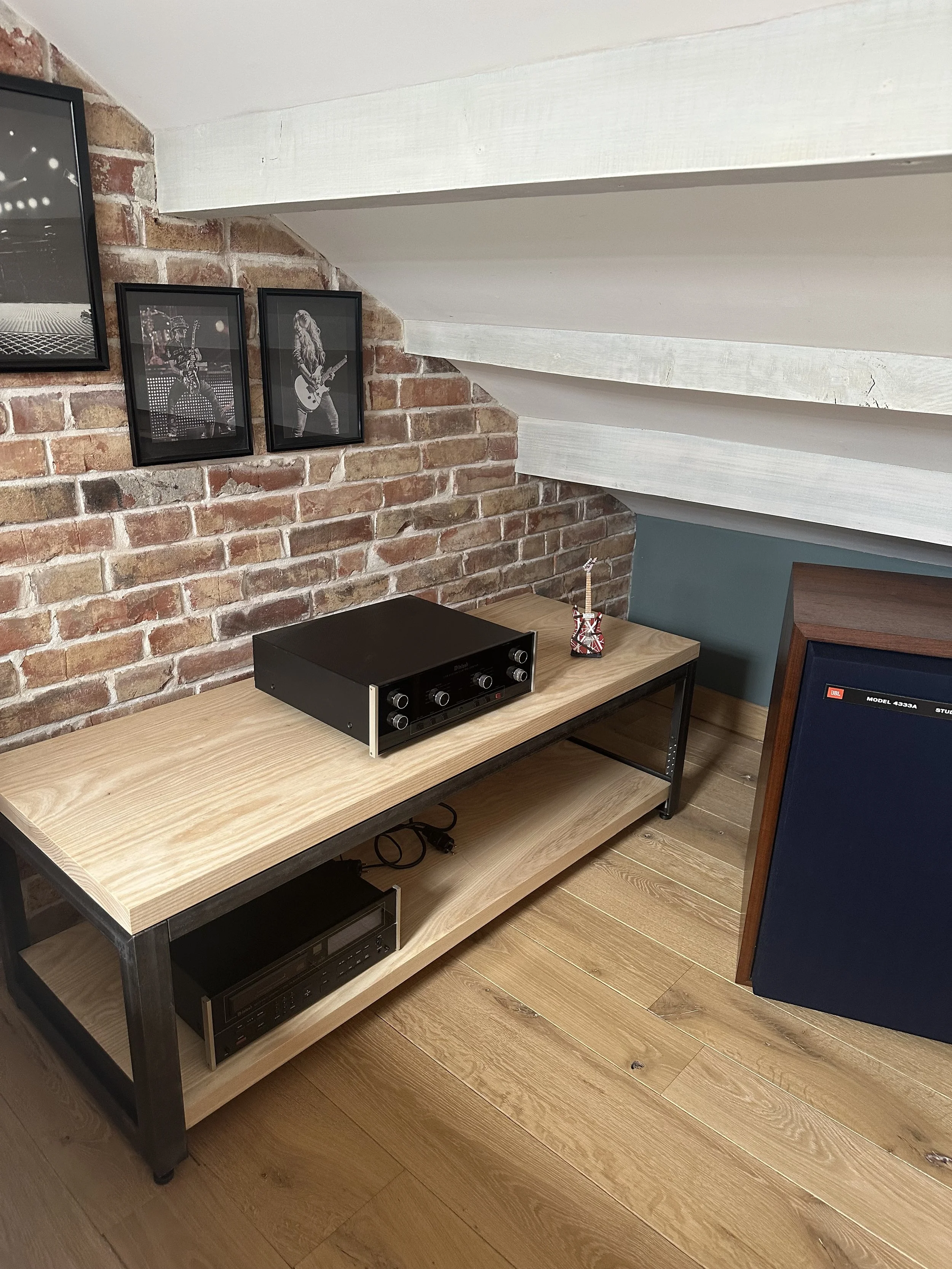
The reality is: most people don’t listen in ideal rooms. I don’t, as you can tell by this photo.
Hi-fi system setups live in real human spaces: living rooms, home offices, basements, bedrooms, and maybe the occasional garage that’s been turned into a listening room but might also have to do double duty as a utility and storage space.
These are all places that were never designed to be dedicated listening rooms. And even if some of them are dedicated listening areas now, they still might open into other shared areas of the house. Hardwood floors, carpeting, furniture, windows, bookshelves and ceiling height all have an impact on how sound behaves.
The solution might be to build the perfect listening room. And in some cases people do.
But for most of us, that just isn’t practical. So the question turns into: what do we do instead?
One approach is to treat the room with things like acoustic panels, bass traps, and diffusers. In certain environments that can be very helpful (and we do apply those treatments at the F&R listening room at our shop). But many folks (myself included) don’t really want their living room to look like a recording studio. They want a space that feels comfortable to spend time in, intentionally. I totally get it, because that’s what I want too.
The challenge of hotel rooms
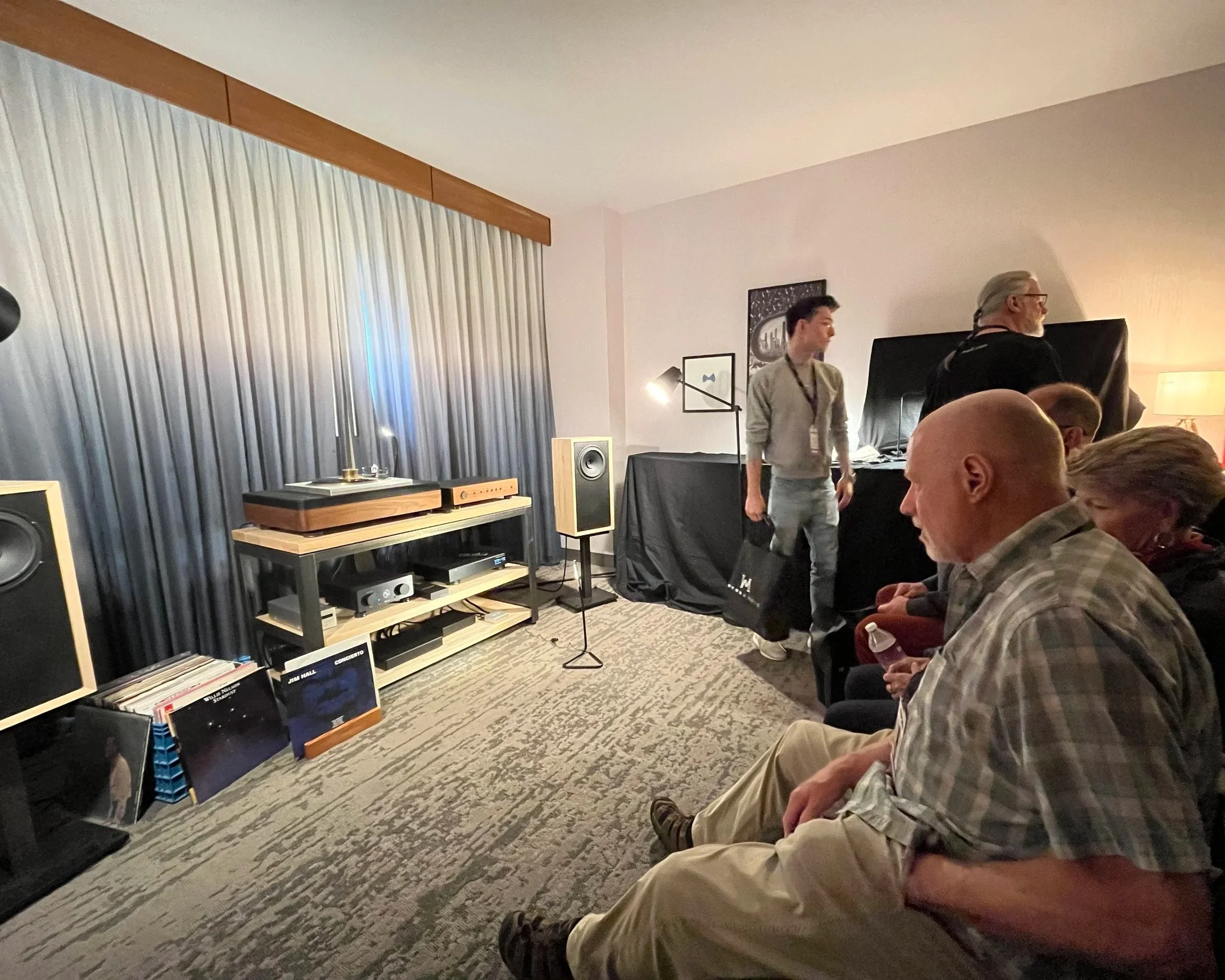
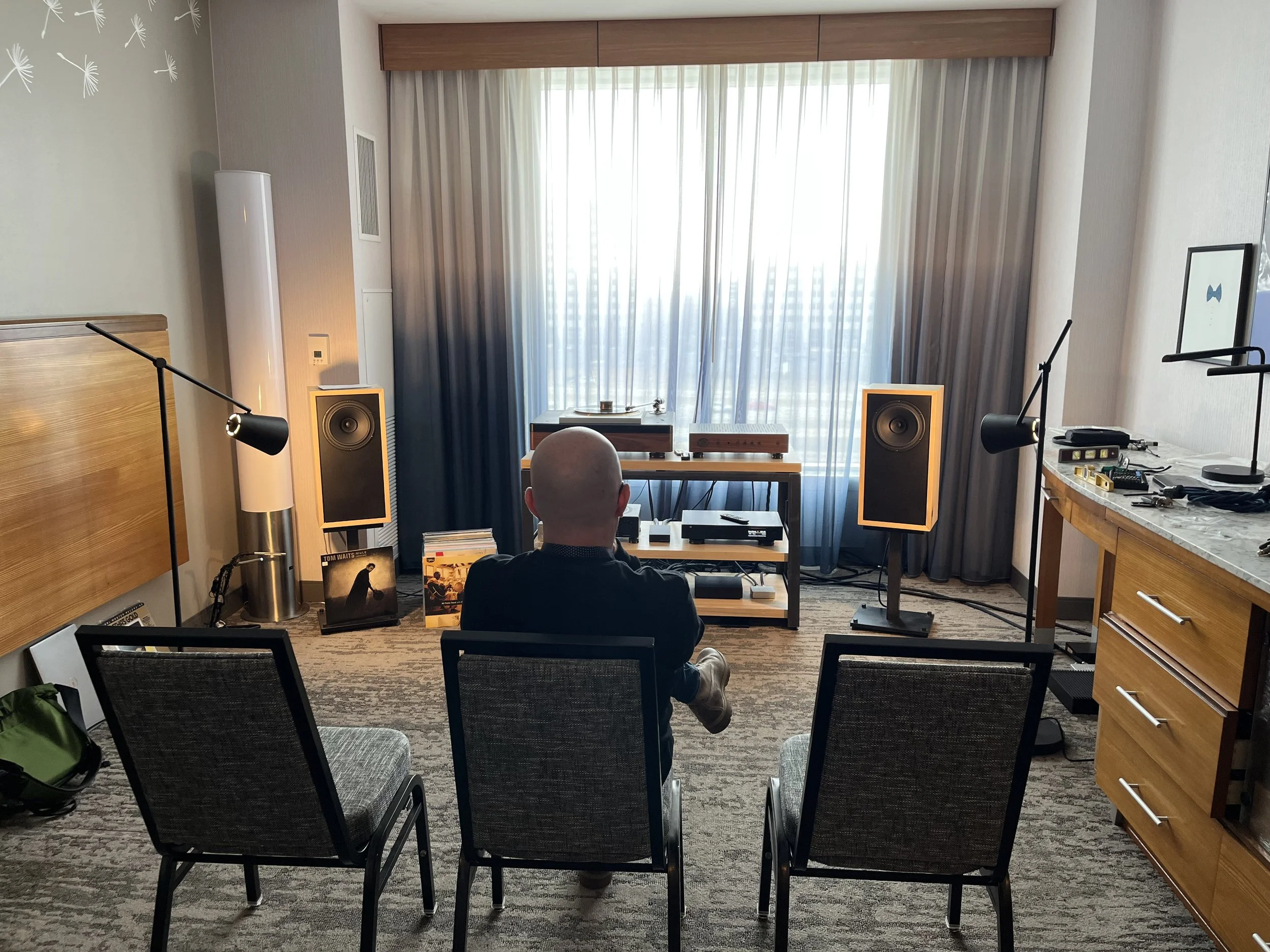
This is one of the reasons setting up at audio shows like AXPONA has become such an interesting exercise for me. The rooms are almost never ideal. They can actually present some of the most challenging room acoustics you’ll encounter.
Symmetry is considered essential for accuracy in audio, but in practice, hotel rooms are inherently asymmetrical, usually entered through a compressed hallway next to the bathroom. The furniture and fixtures aren’t balanced either: that bedless king-size headboard is just…there.
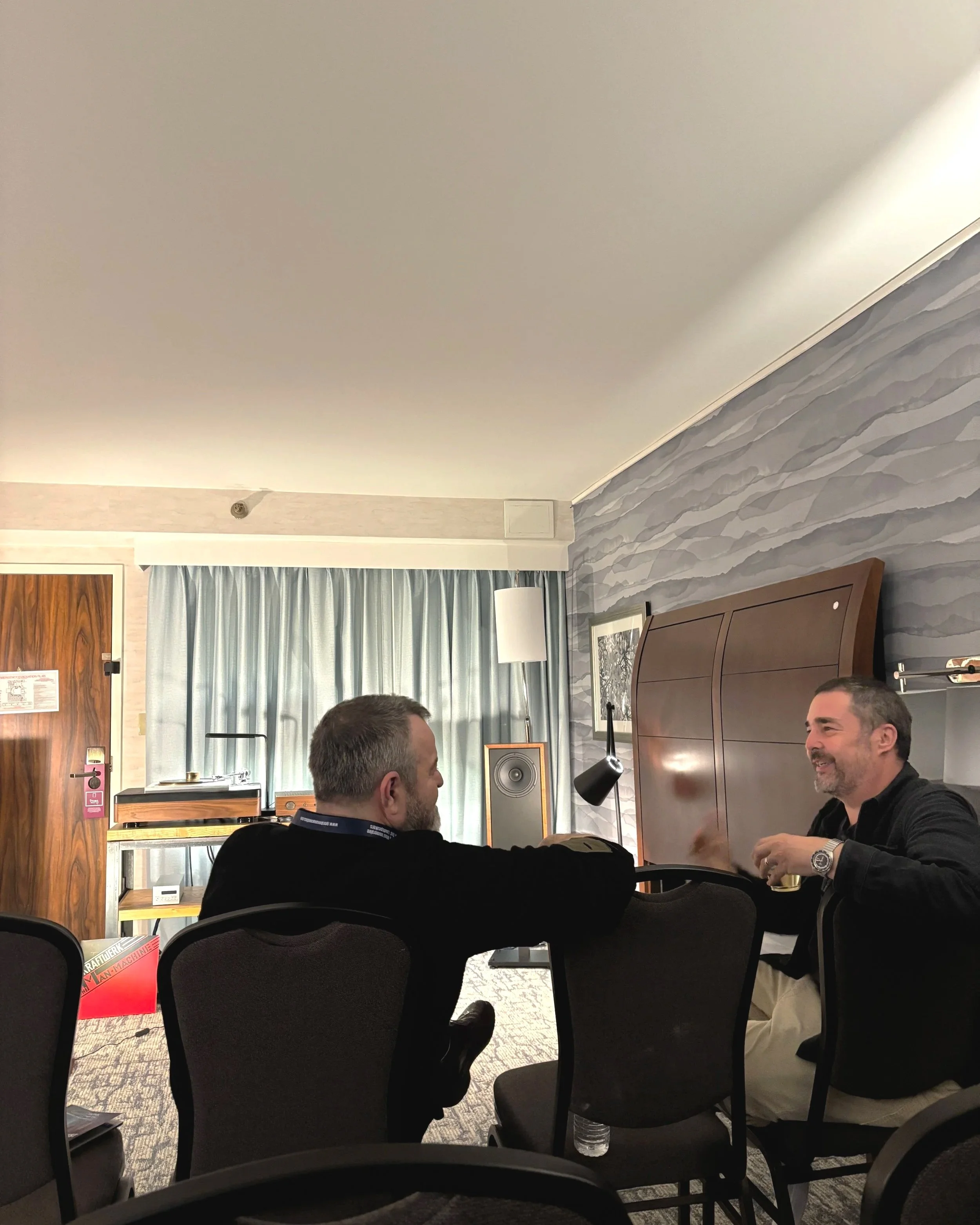
The optimal range might change, depending on how many bodies you have in your room at any given time. You’ll need to decide whether to set up your speakers along the longer or the shorter wall, based on the room and your system’s needs. The things you would typically try to do to avoid boxy midpoints might not apply.
You need enough seats to allow visitors to sit and listen, but it’s hard for more than one or two people to be in the sweet spot of any triangle you try to build. So people in the rear of the room might experience some hollow sound.
Things that worked in a similar configuration at a past show might not sound great this time around, for whatever reason: you’ll have to figure it out iteratively, in real time.
But I’ve honestly found all of these challenges to be instructive. If a system can deliver great sound and achieve tonal balance in a hotel room, it can deliver great sound almost anywhere.
I’ve started to think of audio shows as experiments in real-time system building.
The first question I ask: “Tell me about your room”
Over the years, learning how to get good sound in challenging rooms has become one of the most valuable lessons in my work building audio systems for clients. W
hen someone reaches out to start the conversation, one of the very first things I ask is not about equipment.
Instead, I ask a really basic question:
Tell me about your room.
How big is the space?
How tall are the ceilings?
Is it a closed room, or does it open into other parts of the house?
Is the flooring carpet, hardwood, or tile?
What kind of furniture and decor are in the room?
All of these factors matter — often just as much as speaker placement or the equipment itself.
A good system isn’t just a collection of great audio components operating separately. It’s a group of audio components that work together within a specific space. Speaker placement, listening position, room schematics and system synergy all interact in ways that ultimately determine how the music feels when you sit down to listen. No room is the same.
Building a system for AXPONA
This is part of the mindset my team brings to setting up a room for AXPONA each year.
Our goal for the show isn’t to just have cool stuff on display. It’s to build a temporary but superior listening environment: a space where people can walk in, sit down, and feel like they want to stay because it’s giving great sound.
This year, we’ll be showing a system built around our Raven II speakers and our Archival Turntable, along with amps from Linear Tube Audio, digital components from Grimm Audio and Network Acoustics, and cabling from Black Cat.
But the specific equipment is only part of the story. The real work happens when we’re listening in the room.
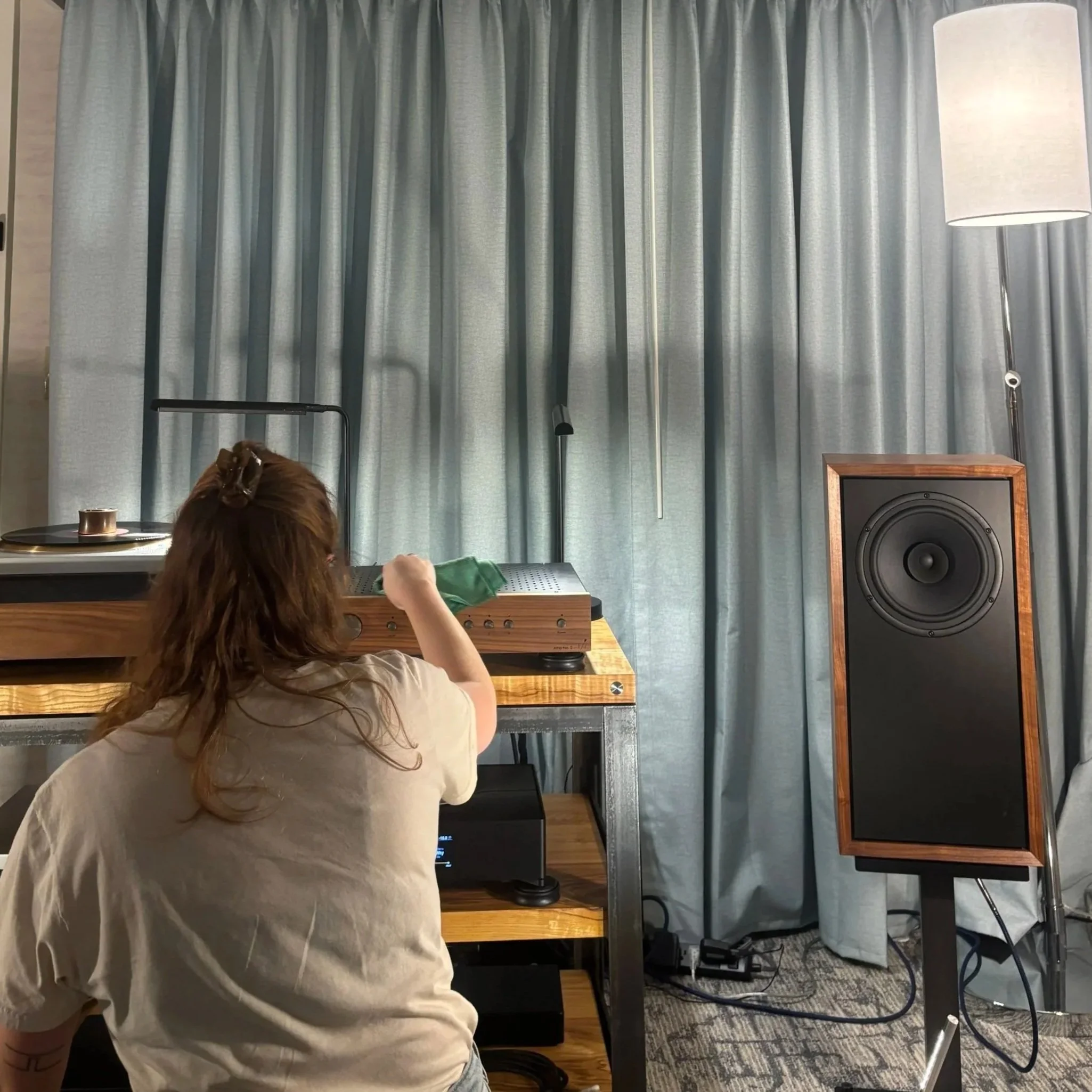
I start by establishing (and then adjusting, and then readjusting) speaker placement in relation to the listening position. This is different in every room. The speakers may need to be asymmetrically placed to compensate for the unbalanced room. Then we slowly shape the system so the sound comes together in the space we’re given.
I fill the empty dresser drawers in the furniture we can’t get rid of with supplies, brochures and inventory (and sometimes extra clothes) so that the drawers aren’t acting like resonant empty boxes.
Every audio show room is temporary. We spend days setting up a system that will only exist for a weekend before it gets packed back into boxes and shipped home again. But the lessons these hotel rooms teach are evergreen, in my opinion.
I’ve realized that there is no perfect room. But if you can make a system sound natural, balanced, and engaging in a space as challenging as a hotel room, you’ve learned something important about how systems behave in the real world — and how to help people get the most out of the systems they bring into their own homes.
And sometimes, if everything comes together just right, even a conference hotel room in Chicago (it’s actually in Schaumburg, if we’re being really specific) can disappear, leaving you with just the music.
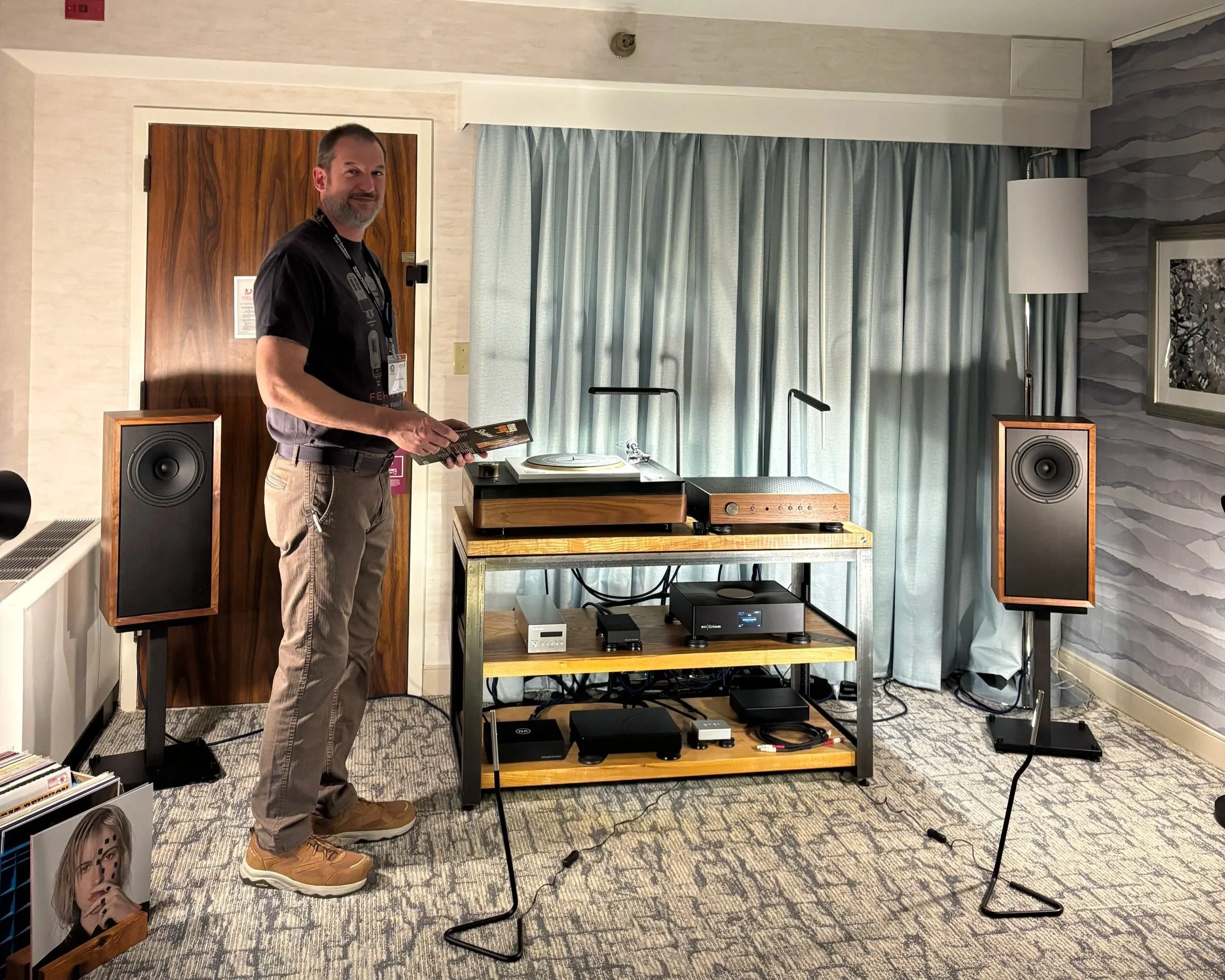
If you’re planning to attend AXPONA, be sure to visit us in Room 584 (we’ll also be in the Exhibit Hall).